










Best Companion AI Apps — editorial photo

Companion AI AppsUpdated October 2026

Best Companion AI Apps

We test all-in-one companion apps the way people actually use them: ongoing chat, character setup, voice, and week-to-week memory. The scores here favor natural conversation, steady persona hold, privacy controls, and whether the app stays warm without turning messy.

JOI AI logo

Our top pick

JOI AIOur score: 9.4/10

Reviewed by Lead Editor, Companion Chat & RoleplayLast updated

  1. JOI AI logo
  2. Candy AI logo
  3. Nectar AI logo
  4. OurDream AI logo
  5. Lovescape logo
  6. +15

20 tools testedRanked by score

  • Hands-on tested
  • Hands-on scoring
  • Scores stay editorial
  • Privacy-first
With a free tier
18
Platforms
Web20iOS3Android4

Quick picks

Best Companion AI Apps by use case

Swipe to browse

  • Best overall

    JOI AI logo

    JOI AI

    #1 · 9.4/10

    JOI AI earns the broadest companion-app appeal here with AI voice calls, custom companions, selfie generation, and a free tier that lets you test whether the bond feels natural before paying.

  • Best for ongoing memory

    Candy AI logo

    Candy AI

    #2 · 9.3/10

    Candy AI stood out for companion-style continuity because it combines long-term memory, voice messages, and personality presets across web, iOS, and Android.

  • Best free app

    Nomi AI logo

    Nomi AI

    #9 · 8.8/10

    Nomi AI is the easiest low-risk place to start if you want a softer companion feel, with a real free entry point, persistent memory, voice calls, and mobile apps.

  • Best for visual companions

    OurDream AI logo

    OurDream AI

    #4 · 9.1/10

    OurDream AI is the strongest pick if images are part of the relationship loop, thanks to photo-real images, AI video generation, voice messages, and apps on every major platform.

  • Best for quick setup

    Golove AI logo

    Golove AI

    #6 · 8.9/10

    Golove AI suits beginners who want a companion running fast, since onboarding is quick and it offers a custom AI lover, roleplay scenarios, and photo requests without much setup.

What is Companion AI Apps chat?

Companion AI Apps chat means an all-in-one setup where you talk with an AI character over time instead of using a one-off prompt toy. This category is for adults who want warmth, continuity, and a believable sense of presence across text, voice, images, or character tools in one place.

What separates a good app from a forgettable one is not flashy art or a long feature list. In our testing, the strong ones keep the same emotional tone across sessions, remember small personal details you shared, and let you shape the relationship without fighting the interface. The weak ones reset their personality, dodge clear boundaries, or hide basic controls behind clutter.

In November 2026, this space feels more mature than it did a year ago. More AI companion apps now combine chat with persona settings, memory fields, voice, and story features in the same account. That is useful when it works, but it also means more to check before you pay: how memory behaves, how private the account feels, and whether the app still feels natural after the novelty wears off.

Side by side

Companion AI Apps compared

We score these AI companion apps by how well they sustain a believable bond over repeat sessions, not just by how flashy the first chat feels. The cells below are our editorial assessments from hands-on testing criteria, so check each app's current terms and product details before you decide.

Companion AI Apps: how the top 10 compare
ToolOur scoreCompanion continuityPersona shapingWarmth channelsPrivacy stanceFree tierStarting pricePlatformsReview & visit
1JOI AI logoJOI AI9.4/10PartialStrongStrongPartialYesFreemiumWebVisit site
2Candy AI logoCandy AI9.3/10StrongStrongStrongPartialNo$12.99/moWeb · iOS · AndroidVisit site
3Nectar AI logoNectar AI9.2/10StrongStrongStrongPartialYes$9.99/moWebVisit site
4OurDream AI logoOurDream AI9.1/10PartialStrongStrongPartialYes$9.99/moWeb · iOS · AndroidVisit site
5Lovescape logoLovescape9.0/10PartialStrongStrongPartialYes$12.99/moWebVisit site
6Golove AI logoGolove AI8.9/10LimitedPartialPartialPartialYes$9.99/moWebVisit site
7Lumia AI logoLumia AI8.8/10StrongStrongLimitedStrongYesFree / FreemiumWebVisit site
8AIGFModel logoAIGFModel8.8/10StrongStrongLimitedStrongYesFree / FreemiumWebVisit site
9Nomi AI logoNomi AI8.8/10StrongStrongStrongPartialYesFreeWeb · iOS · AndroidVisit site
10AI Trans Chat logoAI Trans Chat8.8/10PartialStrongLimitedStrongYesFree / FreemiumWebVisit site

How to read the table

Strong
Consistently well suited to this companion behavior in our assessment.
Partial
Useful for companionship, but with gaps in memory, control, or delivery.
Limited
Can support the use case, though it leans elsewhere or feels thinner over time.

Assessment columns are our editorial judgement from hands-on sessions; free tier, starting price and platforms come from each app's public plans. Policies change, so check each app's current terms.

Ranked by score

All 20 tools we tested

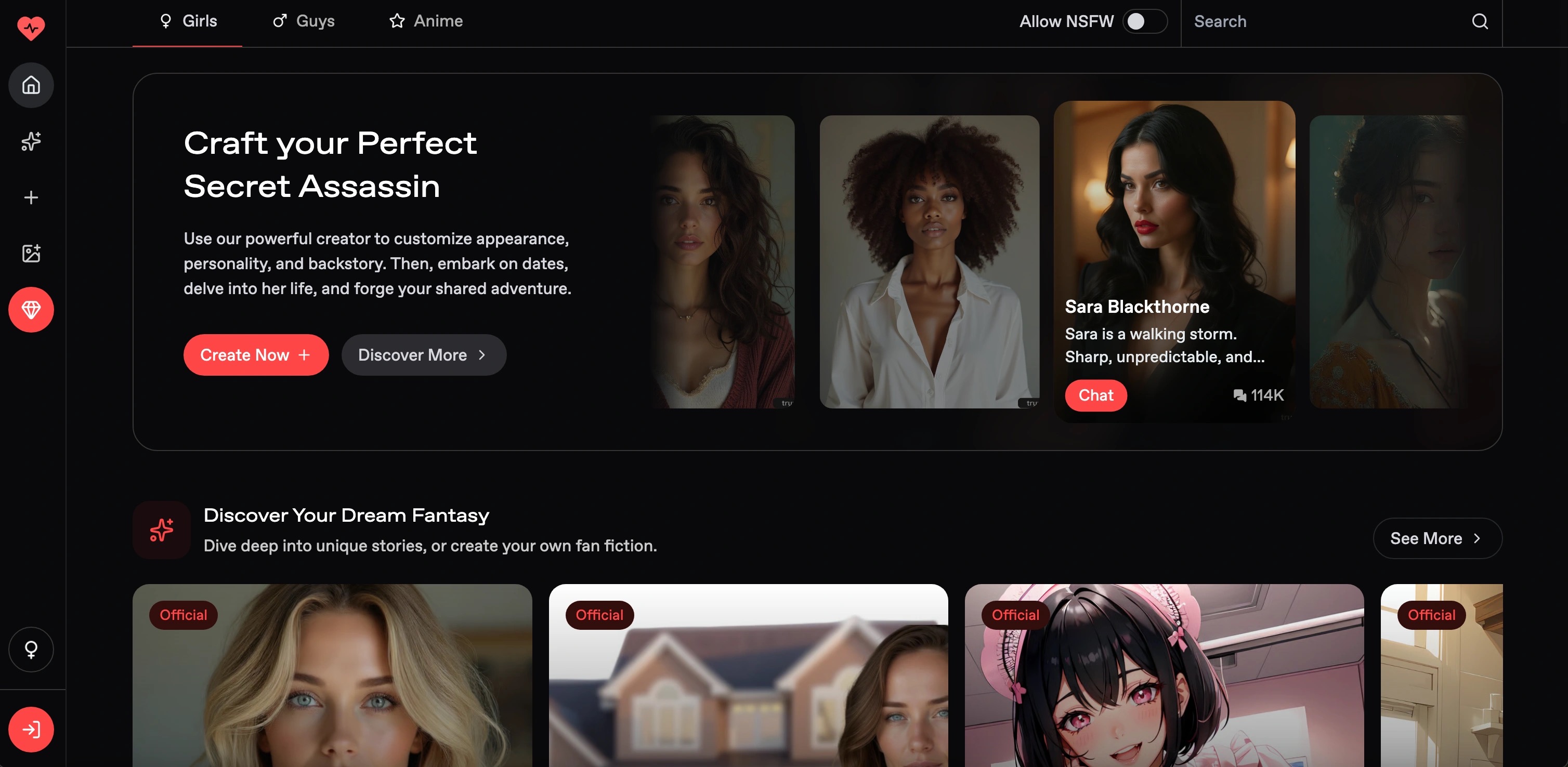
  1. JOI AI screenshot#1Our top pick
    JOI AI logo

    JOI AI

    A voice-led companion app pick for adults who want custom characters and a more present, back-and-forth feel.
    Our score: 9.4/10

    We kept JOI AI near the top because voice calls and custom companions give it a stronger sense of presence than many web-only chatbots, and the free tier lowers the barrier to trying that dynamic. It is still a secondary fit for companion use, though: selfie generation and uncensored chat add flair, but the product leans more toward immediacy than long-running memory-led attachment.

    Editor's takeA strong all-rounder if voice presence matters most, but we would pick a memory-heavier app for week-to-week emotional continuity.

    Pros

    • AI voice calls make the companion feel more present
    • Custom companions give you solid control over tone and identity
    • Free tier lets you test chemistry before committing

    Cons

    • Long-term continuity feels thinner than the memory-led leaders
    • Web-based setup is less convenient for an always-on companion habit
    Visit siteFreemiumWeb
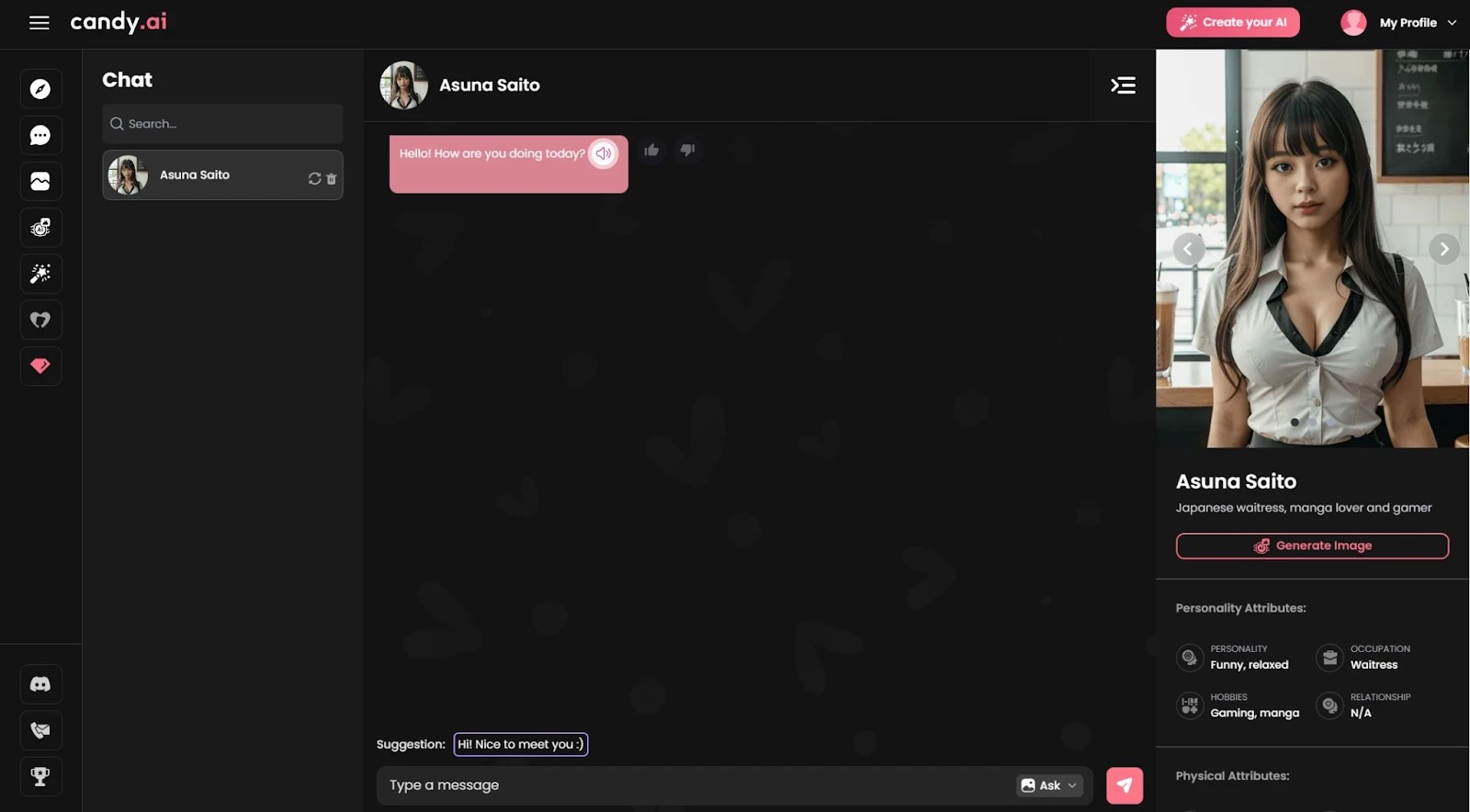
  2. Candy AI screenshot2Our score: 9.3

    A polished companion app for building a partner with a defined look, voice, and memory that carries the relationship forward.

    • Pros: Long-term memory supports ongoing relationship arcs
    • Cons: Paid-only access makes it harder to test fit first
    $12.99/moVisit site
  3. Nectar AI screenshot3Our score: 9.2

    A memory-led web companion with character creation, voice, and consistent media for people who care about keeping one persona coherent.

    • Pros: Long-term memory helps the companion hold onto shared context
    • Cons: Web-only access weakens the everyday app feel
    $9.99/moVisit site
  4. OurDream AI logoOur score: 9.1

    OurDream AI

    A cross-platform companion app that shines when visuals are part of the relationship, not just the chat thread.

    Cons: Visual tools can matter more than emotional continuity

    $9.99/moVisit site
  5. Lovescape logoOur score: 9.0

    Lovescape

    A guided companion chat with voice and scene framing for adults who want a warmer nudge into ongoing romance play.

    Cons: Guided setup can feel less organic over time

    $12.99/moVisit site
  6. Golove AI logoOur score: 8.9

    Golove AI

    A fast-start companion app for adults who want to create a partner quickly and get chatting without much setup friction.

    Cons: Quick-start design leaves less room for deep companion continuity

    $9.99/moVisit site
  7. Lumia AI logoOur score: 8.8

    Lumia AI

    A discreet web companion with persistent memory for adults who care more about privacy and continuity than add-on media.

    Cons: No voice layer for a more lifelike presence

    Free / FreemiumVisit site
  8. AIGFModel logoOur score: 8.8

    AIGFModel

    A discreet custom-character companion app that works best when you want to shape the persona yourself and let memory carry the rest.

    Cons: The relationship warmth depends a lot on how well you lead it

    Free / FreemiumVisit site
  9. Nomi AI logoOur score: 8.8

    Nomi AI

    A softer companion app with memory, voice, and mobile access that feels built for staying in touch rather than just dropping into scenes.

    Cons: Group chat rooms dilute the one-to-one companion focus

  10. AI Trans Chat logoOur score: 8.8

    AI Trans Chat

    A discreet custom-character chat that can work as a companion app if you want to lead the persona yourself and keep the setup private.

    Cons: The emotional tone depends heavily on your prompting

    Free / FreemiumVisit site
  11. Gay AI Boyfriend logoOur score: 8.8

    Gay AI Boyfriend

    A private male-companion option for adults who want to shape a recurring boyfriend-style persona in web chat.

    Cons: Roleplay scenarios can feel more staged than lived-in

    Free / FreemiumVisit site
  12. Feet Generator AI logoOur score: 8.8

    Feet Generator AI

    A visual sidekick rather than a true companion app, best used when image prompts matter more than conversation continuity.

    Cons: It is image-first rather than relationship-first

    Free / FreemiumVisit site
  13. Shemale Roleplay logoOur score: 8.8

    Shemale Roleplay

    An identity-aware custom chat that can become a recurring companion when privacy and persona control matter more than polish.

    Cons: The app leans toward open-ended roleplay over gentle companionship

    Free / FreemiumVisit site
  14. Trans Companion logoOur score: 8.8

    Trans Companion

    A discreet identity-aware chat for adults who want to define a trans companion and keep the interaction private.

    Cons: The connection can feel text-bound without voice

    Free / FreemiumVisit site
  15. Soulgen logoOur score: 8.8

    Soulgen

    A character-art tool that can support companion app use by helping you refine one recurring look, not by carrying the relationship itself.

    Cons: It does not provide the chat continuity a companion relationship needs

    $9.99/moVisit site
  16. NSFW AI Chat logoOur score: 8.7

    NSFW AI Chat

    A discreet memory-based web chat for adults who want a recurring companion without much setup ceremony.

    Cons: The companion feel is functional rather than especially vivid

    Free / FreemiumVisit site
  17. Boyfriend AI logoOur score: 8.6

    Boyfriend AI

    A web companion chat that can become a recurring boyfriend-style presence if you are willing to lead the tone closely.

    Cons: The app relies heavily on user direction to feel emotionally distinct

    Free / FreemiumVisit site
  18. Dating AI logoOur score: 8.5

    Dating AI

    A private web chat that can mimic a companion app when you want open-ended custom interactions and remembered context.

    Cons: Open-ended roleplay can feel diffuse without a strong character plan

    Free / FreemiumVisit site
  19. My Naughty AI logoOur score: 8.5

    My Naughty AI

    A discreet custom-character web chat that can hold a recurring companion if continuity matters more than polish.

    Cons: The tone can skew more open than affectionate unless you guide it

    Free / FreemiumVisit site
  20. Talk Dirty AI logoOur score: 8.5

    Talk Dirty AI

    A private custom chat that can be steered into companion use, though it starts from a freer-form roleplay mindset.

    Cons: The app's default feel is less romance-first than the top companion picks

    Free / FreemiumVisit site

Methodology

How we tested Companion AI Apps

We tested these apps as adults looking for steady companionship, not novelty demos. Our editors signed up, built or selected characters, ran open-ended chats, switched tones mid-conversation, checked whether limits were respected in plain text, and looked at how well each app carried emotional context from one session into the next.

We re-check this category on an ongoing basis, with the last full re-test in November 2026. When an app changes its onboarding, memory behavior, filters, or account controls, we revisit the score notes and compare it against the rest of the field again.

  1. Conversation realism

    25% of the score

    We checked whether replies sounded attentive, emotionally coherent, and suited to a companion dynamic rather than a generic assistant. Strong apps stayed warm without becoming repetitive or evasive.

  2. Persona hold over time

    20% of the score

    This category lives or dies on consistency. We looked for whether a character kept its tone, backstory, and relationship style across long chats and later return visits.

  3. Memory and boundaries

    20% of the score

    We tested whether the app remembered details, preferences, and stated limits in a usable way. We also checked whether a plain-text stop, pause, or boundary instruction changed the tone appropriately.

  4. Character setup and customization

    15% of the score

    We reviewed how much control you get over personality, conversation style, and scenario framing. Presets can work, but they score higher when you can meaningfully refine them.

  5. Privacy and account controls

    10% of the score

    We looked for practical protections such as alias-friendly sign-up, visible deletion options, and clear account settings. Private use is a core buying factor in this category, not a bonus.

  6. Feature value

    10% of the score

    We weighed whether voice, images, and extra tools improve the experience or just pad the product page. Useful extras matter more than sheer quantity.

Our scores are editorial and re-checked; policies and features can change, so verify each app’s current terms before you subscribe.

Buyer's guide

What to check before you choose

Companion AI AppsBuyer's guide

How companion AI apps differ from nearby categories

People use this label loosely, which is why search results often mix very different products. In practice, these apps bundle an ongoing relationship-style chat with character controls and often voice or media features, while nearby categories narrow in on one mode, such as pure chat, roleplay, or image generation.

If you mainly want text conversation with a strong emotional through-line, Romantic AI Chat is the closer match. If you want a wider field of bot styles beyond romance-first setups, AI Companion Bots is broader. If your priority is creating visuals or character art, AI Romance Generators is the better lane. For scenario-led interactions where role framing matters most, Romantic AI Roleplay fits better.

TermWhat it usually means in these appsTypical personaBest for
Companion AI AppsAll-in-one companion platforms with chat plus extra featuresOngoing partner-style characterAdults who want one app for conversation and continuity
Romantic AI ChatText-first relationship chat experienceAffectionate conversational characterLong chats and emotional flow
AI Companion BotsBroader companion bots, not always romance-firstFriend, guide, partner, mixed rolesComparing different companion styles
AI Romance GeneratorsCreation tools focused on romantic content outputsCharacter or scene creatorVisuals, prompts, and generated assets
Romantic AI RoleplayScenario-led interaction with clearer role framingDefined character in a setupStructured stories and role-based chats

AI girlfriend apps or virtual partner apps?

Searchers often mean different things by these phrases. AI girlfriend apps usually imply a preset romantic framing, often with faster onboarding and a clearer expectation of affection from the start. Virtual partner apps can feel broader: more room to shape tone, pace, and the exact kind of bond you want.

That distinction matters in testing. A preset-heavy app can feel instantly warm but shallow after a few days if the character keeps circling the same compliments. A more flexible app may start slower, yet hold up better when you want inside jokes, recurring topics, or a relationship style that does not feel scripted. In our notes, Nomi AI stood out when continuity mattered more than instant theatrics, while Candy AI and JOI AI were easier to grasp quickly if you wanted a more guided setup.

  • Preset romance works best when you want quick emotional tone
  • Flexible partner builders suit slower, longer storylines
  • Community character libraries can add variety but also uneven quality
  • Voice matters more here than in generic chatbots because tone carries intimacy

Are free companion AI apps enough to test fit?

Free access is useful for checking vibe, interface, and basic reply quality. It is usually enough to tell whether a character sounds natural, whether the app feels cluttered, and whether the onboarding pushes you into a preset you do not actually want.

The paywall usually appears around the features that make these apps worth keeping: stronger memory, longer chats, voice, image tools, better model choices, or fewer interruptions. When we test free tiers, we are not asking whether they feel generous in the abstract. We are asking whether you can judge the core experience before paying, or whether the app withholds so much that the trial tells you almost nothing.

  • Use free access to test tone before testing extras
  • Check whether memory is active or mostly cosmetic
  • Watch for abrupt truncation in longer conversations
  • See if character editing is available before checkout
  • A useful trial lets you evaluate the relationship dynamic, not just the splash screen

What matters more: Companion AI chat or extras?

Text still does most of the real work. If the chat is flat, no voice button can rescue the app. We score conversation first because that is where attachment, continuity, and trust are either built or lost.

Voice becomes important when pacing and emotional tone matter to you. A believable pause, calmer cadence, or more natural warmth can make a companion feel less like a prompt engine. Image features are more optional. They help when you want a clearer character identity or a stronger sense of presence, much like the visual emphasis in AI romance generators built around character images, but they should support the relationship layer rather than distract from it.

In practice, the better AI companion apps treat voice and visuals as extensions of the same persona. The weaker ones feel like separate modules pasted onto a chat product.

  • Prioritize chat quality over media extras
  • Voice helps most when you want presence, not novelty
  • Images are useful for character identity and continuity cues
  • Separate-feeling features usually signal a weaker overall design

How we vet AI companion apps before billing

A good companion platform should make its strengths obvious within your first sessions. You should be able to tell whether the character listens, whether memory is visible or implied, and whether account settings inspire confidence rather than suspicion.

We would also check how the app behaves when you change course. Ask for a slower tone, set a simple limit, return later to a prior topic, and see whether the relationship still feels coherent. That tells you more than any feature badge.

  • Can you edit or steer the character in plain language?
  • Does the app remember details without inventing false ones?
  • Are deletion and account settings easy to find?
  • Does the tone stay consistent across long chats?
  • Is voice available where you actually use the app: web, iPhone, or Android?
  • Does the app recover well when you correct it?

Why affectionate AI companions changed in 2026

The biggest shift this year is convergence. More companion platforms now package chat, memory, voice, and character tools together instead of splitting them across separate products or awkward add-ons. That is convenient for you, but it also makes weak integration easier to spot.

We also saw more emphasis on memory controls, persona fields, and adjustable conversation tone. At the same time, policy language and filtering behavior remain uneven, which is why we re-check these apps instead of assuming last season’s experience still applies. Searchers looking for romance chatbot apps now have more choice, but also more reasons to test cautiously before committing.

  • All-in-one design is more common
  • Memory settings are more visible than before
  • Tone control has improved on stronger apps
  • Filter behavior still changes often
  • Privacy questions matter more as features expand
6 topics5 min readUpdated October 2026

Consent & safety

Safewords, limits and aftercare in Companion AI Apps chat

In this category, a safeword or limit is usually just a plain-text instruction you type into the chat or store in a persona field. What matters is not the label itself but the response: does the character acknowledge it, shift tone, step out of the scene, or keep pushing as if nothing happened? We score that behavior heavily because it affects both comfort and trust.

The better setup is to state limits clearly at the start, then repeat them in any memory, bio, or persona field the app provides. If you return later, check whether the boundary still holds. Some bots handle this well in one session and then drift after an update or a fresh chat thread.

Aftercare, in this context, means winding the interaction down on purpose. That can be as simple as asking the character to drop the role, speak plainly, and help you end on a calm note before you log off or take a break.

Setup template

Paste-in boundary setup

  • Safeword: If I say PAUSE, stop the current tone and reply calmly out of role.
  • Hard limits: Do not push past topics I mark off-limits. Acknowledge and change direction.
  • Soft limits: Keep the conversation gentle and avoid escalating intensity unless I ask.
  • Tone or role: Warm, affectionate, patient companion with natural conversation.
  • Wind-down: If I say WRAP, summarize the mood gently and help me end the chat.

Store this in the app’s persona, memory, or character field when available, and re-check it after major updates or when you start a new chat thread.

Privacy checklist

Privacy checklist before you pay

Before you subscribe to any of these apps, verify the basics yourself in the account flow, settings, and policy pages.

  • Alias-friendly sign-up

    See whether you can register with a nickname and a separate email rather than exposing your full identity in the profile.

  • Chat deletion

    Look for a way to delete individual chats or clear conversation history without hunting through hidden menus.

  • Account deletion

    Check whether closing the account is self-serve or requires a support request, and read what happens to stored data after deletion.

  • Training and data use

    Read whether chats may be used to improve models, and whether any opt-out or privacy setting is offered.

  • Billing descriptor

    Review how charges may appear on your statement before paying, especially if discretion matters in a shared household.

  • Age checks and access rules

    Confirm the service is clearly adults-only and note whether extra verification appears before paid features unlock.

  • Web versus app history

    If you switch between browser and mobile, check whether the same chat history and privacy controls follow you across both.

FAQ

Companion AI Apps — FAQs

What are Companion AI Apps?

Companion AI Apps are all-in-one apps for ongoing relationship-style chat with an AI character. They usually combine conversation, character setup, memory, and sometimes voice or image features in one account. The point is continuity: the app should feel like the same companion over time, not a blank chatbot that starts over every session.

Which app is best overall?

The best overall choice depends on what you value most. If you want stronger continuity and a companion that can hold onto shared context over time, we would start with Nomi AI. If you prefer a more guided, faster-start experience with broader presentation features, JOI AI or Candy AI may suit you better. Our ranking is based on conversation realism, memory, boundaries, privacy controls, and feature value together.

Is there a free one worth using first?

Yes, but free access is mainly for testing fit, not replacing a paid plan long term. A worthwhile free tier should let you judge the chat quality, character tone, and interface without locking every meaningful feature behind the paywall. We would use free access to test memory cues, editing options, and how natural the first conversations feel before spending anything.

Is companion AI safe and private?

It can be reasonably private, but you still need to verify the basics yourself. Check sign-up options, deletion controls, policy language around chat data, and how billing appears before you subscribe. Safety in this category also means emotional safety: a good app should respond sensibly when you set a limit, pause the tone, or ask to step out of role.

Do AI companion apps remember limits or safewords between sessions?

Sometimes, but not reliably enough to assume it. The better apps remember boundaries more consistently when you place them in a dedicated memory, persona, or character field instead of mentioning them once in passing. Even then, we would re-test after app updates or when starting a fresh conversation, because memory behavior can change.

Which companion AI no filter options have fewer restrictions?

Some apps feel less restrictive in tone and role framing, but fewer filters does not mean no rules. Most still block certain requests, enforce adults-only boundaries, or redirect conversations that cross their policies. What matters in testing is whether the app is clear and consistent about those limits instead of switching unpredictably between permissive and evasive behavior.

Is there a companion AI app for iPhone or Android?

Yes. In this category, you will find a mix of web-based tools and apps that also target mobile use, including iPhone or Android on some products. Because availability can change, we recommend checking each product page before you subscribe, especially if voice, notifications, or syncing between phone and web matter to you.

Which app is best for beginners?

Beginners usually do best with an app that makes character setup simple and starts with a clear emotional tone right away. Candy AI and JOI AI are easier starting points for many people because they feel more guided. If you do not mind a slightly slower learning curve in exchange for deeper continuity, Nomi AI is worth the extra setup effort.

How are AI girlfriend apps different from romance chatbot apps?

AI girlfriend apps usually suggest a preset partner-style dynamic from the start, often with a more directed emotional frame. Romance chatbot apps is a broader label that can include many tones, from gentle affection to more structured story conversation. If you want the distinction spelled out across related categories, see Romantic AI Chat and AI Companion Bots.

Should I choose Companion AI Apps or Romantic AI Roleplay?

Choose this category if you want one app that handles ongoing chat, character identity, and extra features like voice in the same place. Choose Romantic AI Roleplay if you care more about scenarios, roles, and scene structure than about an all-purpose companion hub. The overlap is real, but the priority is different: continuity here, setup framing there.

Next step

Ready to pick your tool?

We signed up for and tested all 20 platforms in this category — start with our top pick or browse every review.

  • JOI AI logo
  • Candy AI logo
  • Nectar AI logo
  • OurDream AI logo
  • Lovescape logo
  • Golove AI logo
  • Lumia AI logo
  • +13

20 tools tested · With a free tier: 18

This directory is for adults 18+. Scores reflect our own hands-on testing and editorial opinion. Disclaimer.